
A hospital go bag for a stay you did not plan
A small bag by the door. In an emergency, call 911.
Disclosure: We may earn a commission if you buy through links on this page. It does not change our guidance. Affiliate Disclosure
Emergencies first
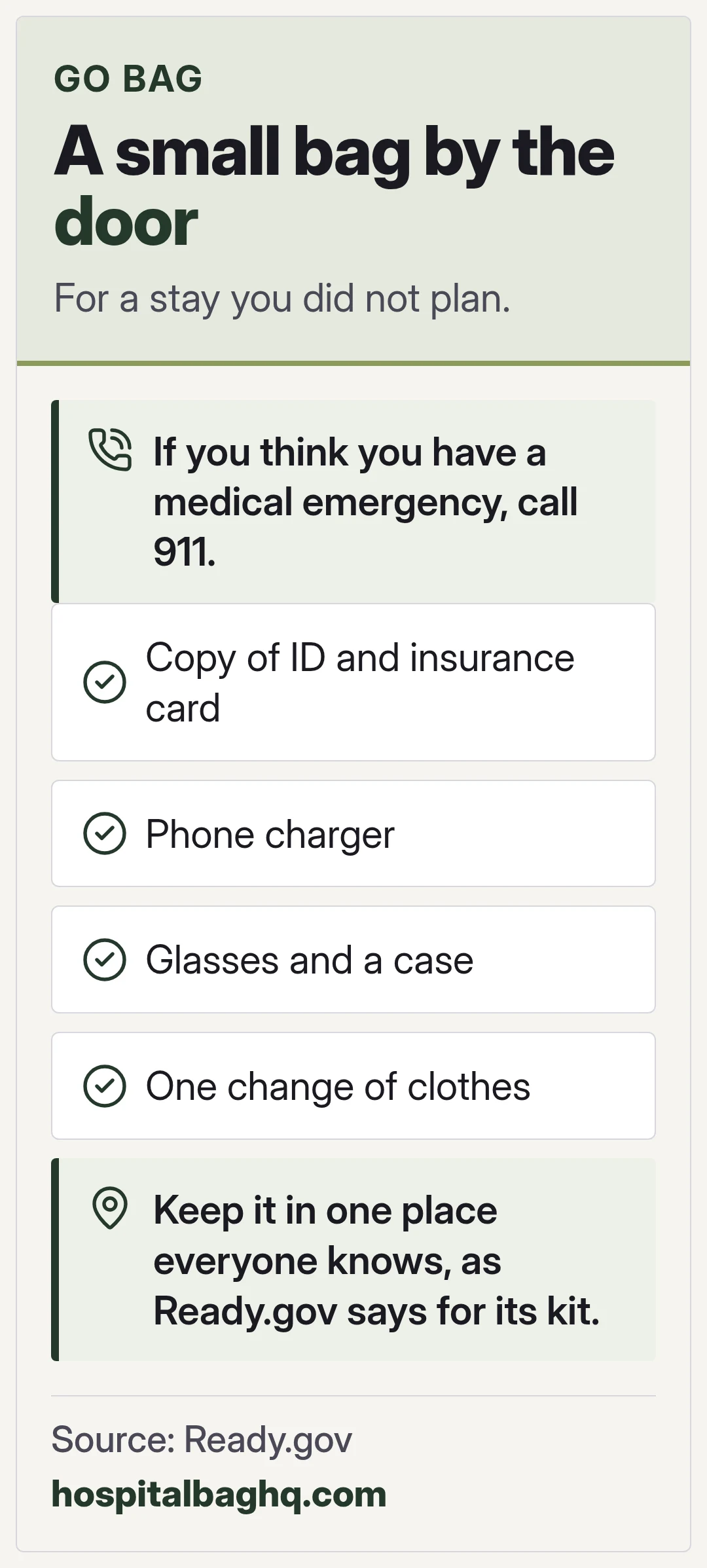
If you think you have a medical emergency, call 911. A go bag is for times when there is a moment to grab it. Someone can bring it later.
Not a disaster kit
Ready.gov uses the word kit for disaster supplies, such as water, a flashlight, and a first aid kit. A hospital go bag is smaller. It holds what you would want on the first night of a stay.
What goes in
Some people choose to keep a copy of their ID and insurance card, a phone charger, glasses and their case, and one change of clothes in a go bag.
Where to keep it
Ready.gov says to keep its kit in a designated place, ready in case you have to leave your home quickly, and to make sure all family members know where it is kept.
Ask about what you take
Ask your clinician and your hospital how to handle any medicines you take.
Sources: Ready.gov, Build A Kit.
FAQ
General information only, not medical advice. We are not a hospital, birth center, or health care provider, and we cannot tell you what your hospital provides, allows, or requires. Ask your clinician and your hospital or birth center what to bring and what to expect. For car seats, follow the seat maker's instructions and your vehicle owner's manual, and see NHTSA's car seat guidance. If you think you have a medical emergency, call 911.
Next: when to pack
Pack before you need it.
